Patent
Laser Projection Apparatus
A way to build a large, full-color video image out of red, green, and blue laser light — combining and balancing the beams through an optical system so the projected picture is bright, sharp, and correctly colored.
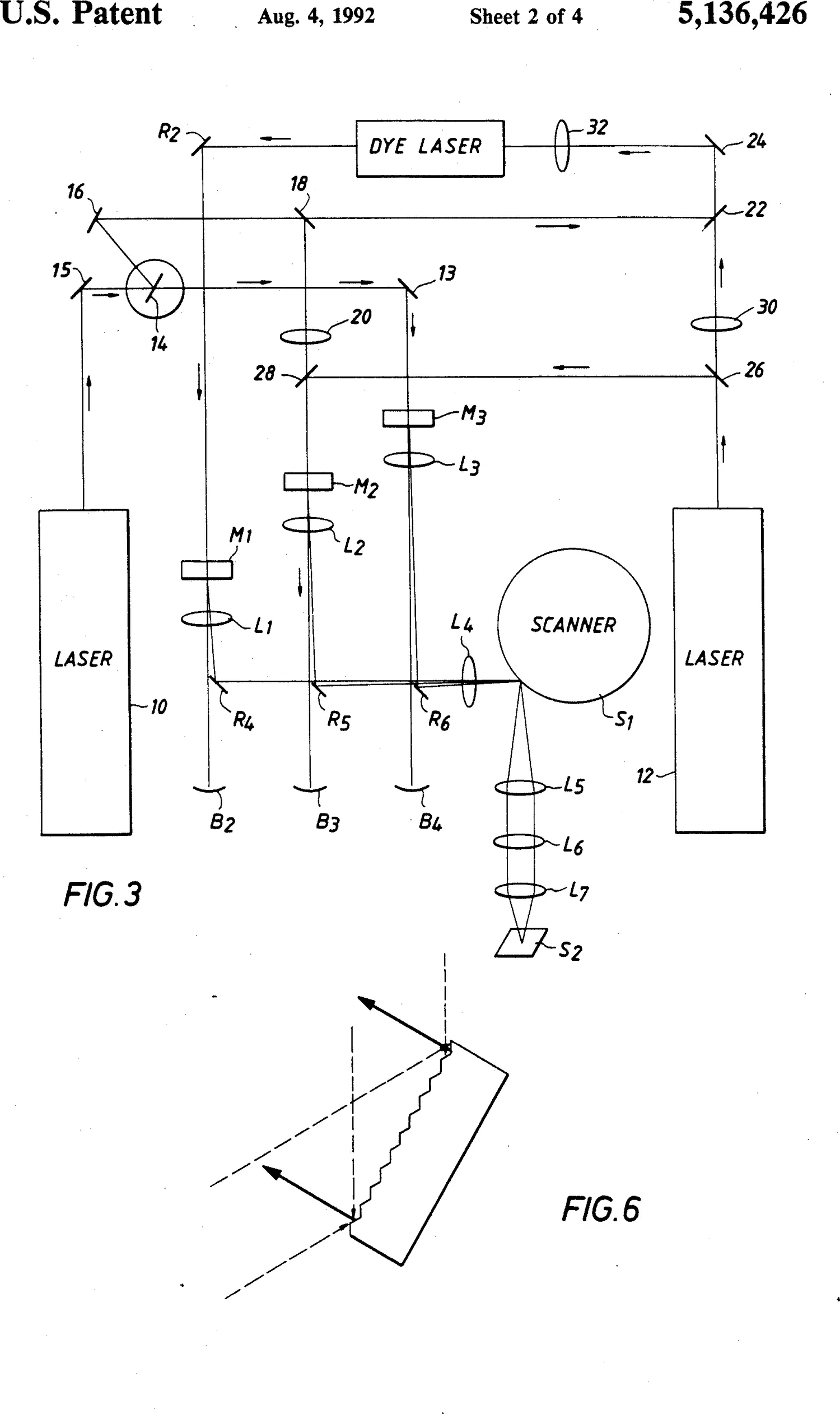
The drawing, explained
What the figure shows
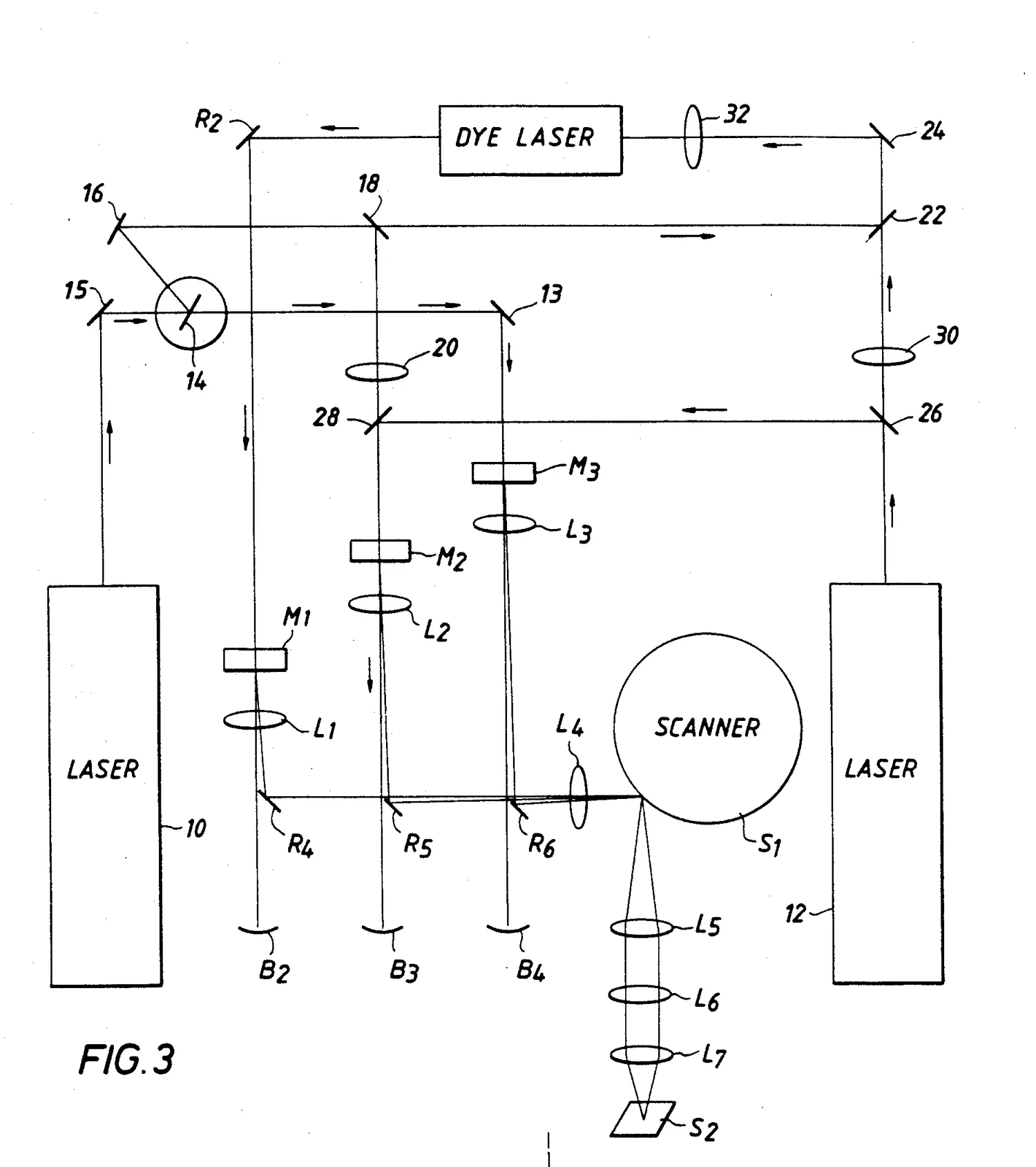
- 1 Dye laser — the red light source
- 2 Argon-ion laser — a green / blue source
- 3 Argon-ion laser — the other green / blue source
- 4 Scanner — sweeps the combined beam into a raster
- 5 Projection optics — focus the image onto the screen (S₂)
- Patent number
- US 5,136,426
- Issued
- August 4, 1992
- Inventors
- Paul A. Linden
- Assignee
- Advanced Laser Projection, Inc.
U.S. Patent 5,136,426, “Laser Projection Apparatus,” is the cornerstone of Paul’s invention story, assigned to Advanced Laser Projection, Inc. It describes a system for producing balanced, full-color projected imagery using lasers as the light source.
What it does, in plain English
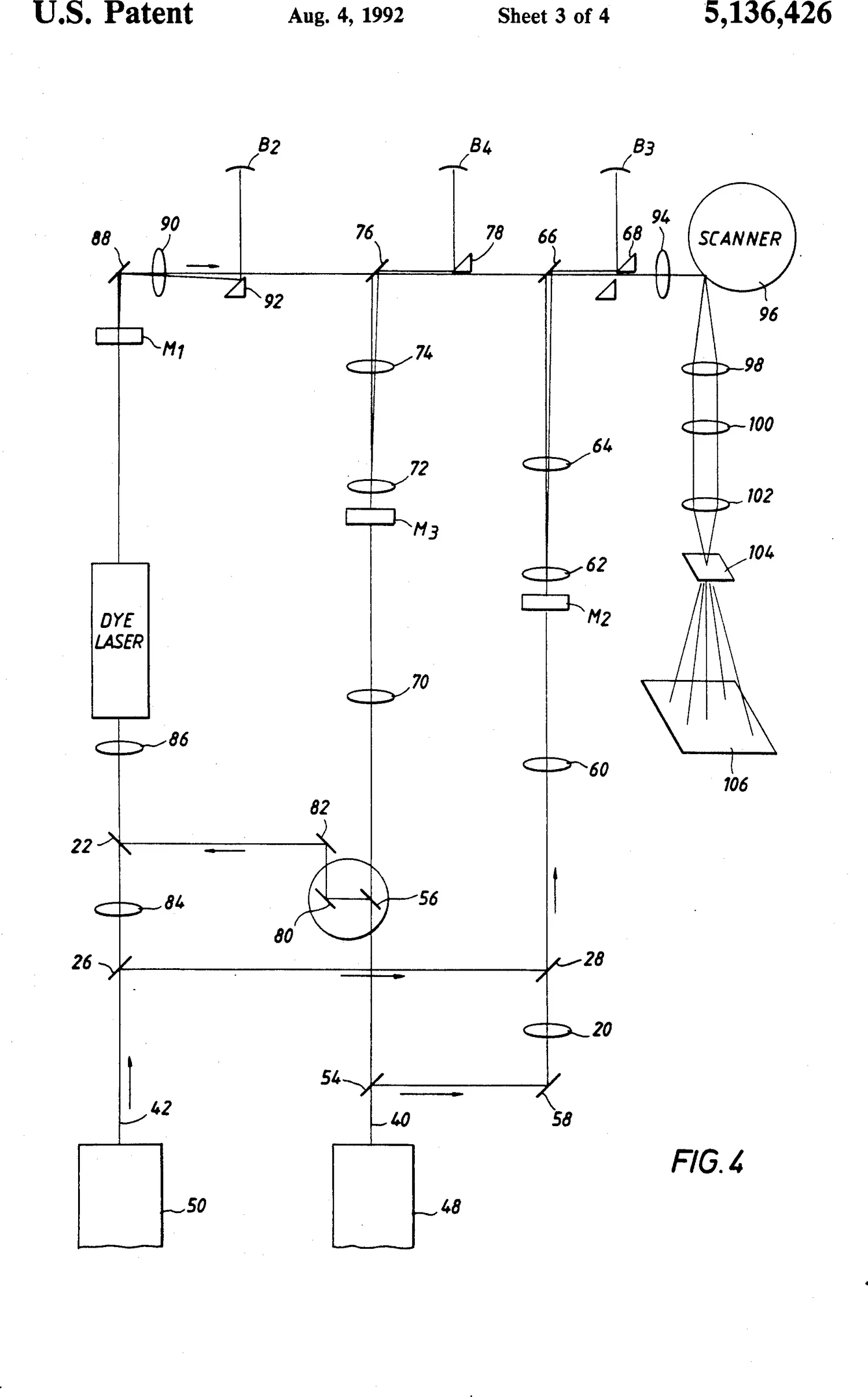
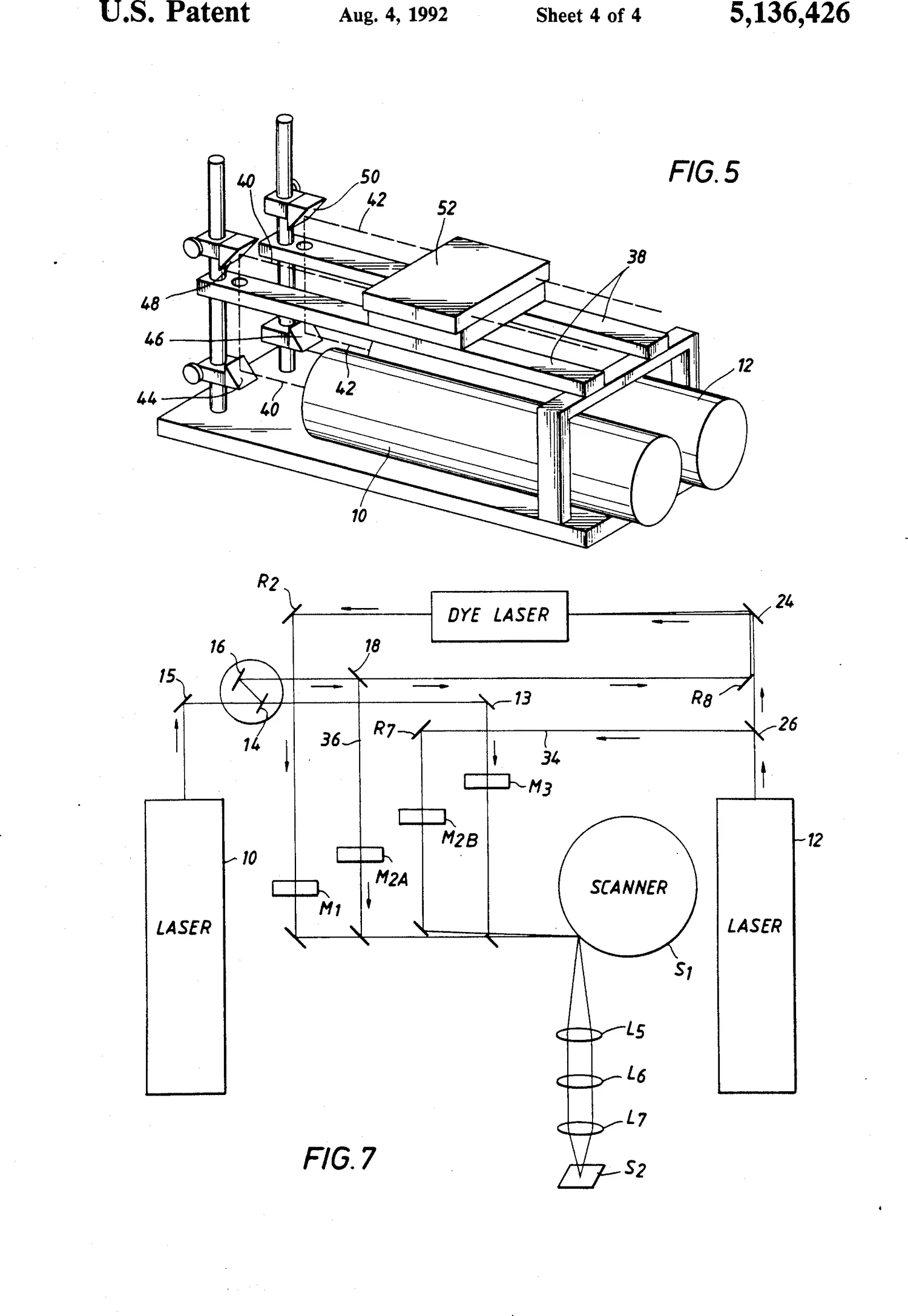
The patent was developed to maximize the various wavelengths of two argon lasers and a dye laser — tuning and combining them to provide the best color balance of the red, green, and blue laser beams, for the brightest image and the best color saturation. Building a color picture from lasers means precisely converging those beams and controlling their brightness moment to moment, so the final projected image is bright, sharp, and correctly colored — at a scale and depth of focus conventional lamp-based projectors of the era could not reach.
A family date
The patent was issued on August 4, 1992 — the birthday of Paul’s wife, Elaine Linden. Paul is especially proud of the coincidence, and likes to point out that his most important patent shares such a meaningful family date.
The full patent, including its claims and figures, is available from the USPTO and Google Patents.
Technical abstract
The patent covers aspects of a laser projection system intended to create balanced full-color projected imagery using laser light sources and associated optical components.