Patent
Image Mover
Once you can project a large laser image, you often want to move it — slide it across a wall, rotate it, or resize it — without physically moving the whole projector. This patent describes an optical assembly that steers and repositions the projected image itself.
The drawing, explained
What the figure shows
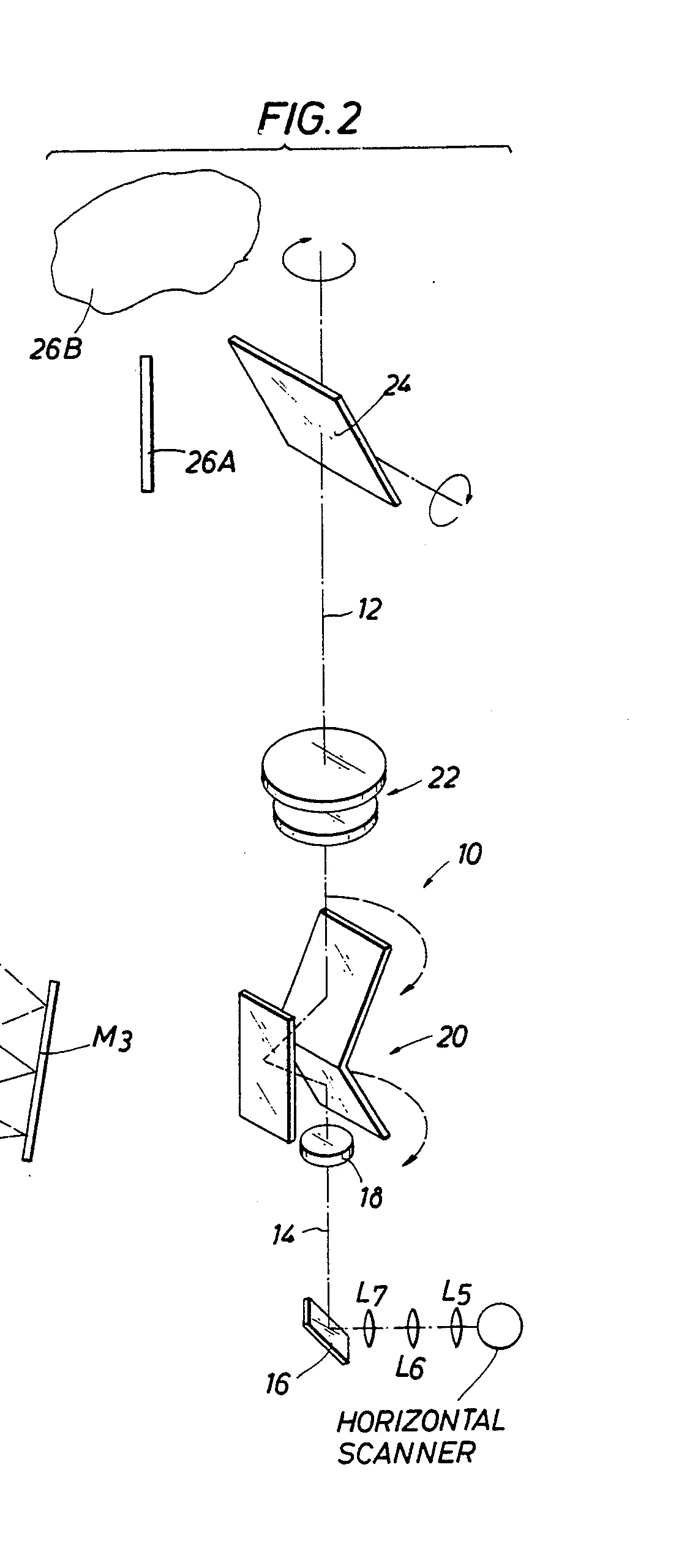
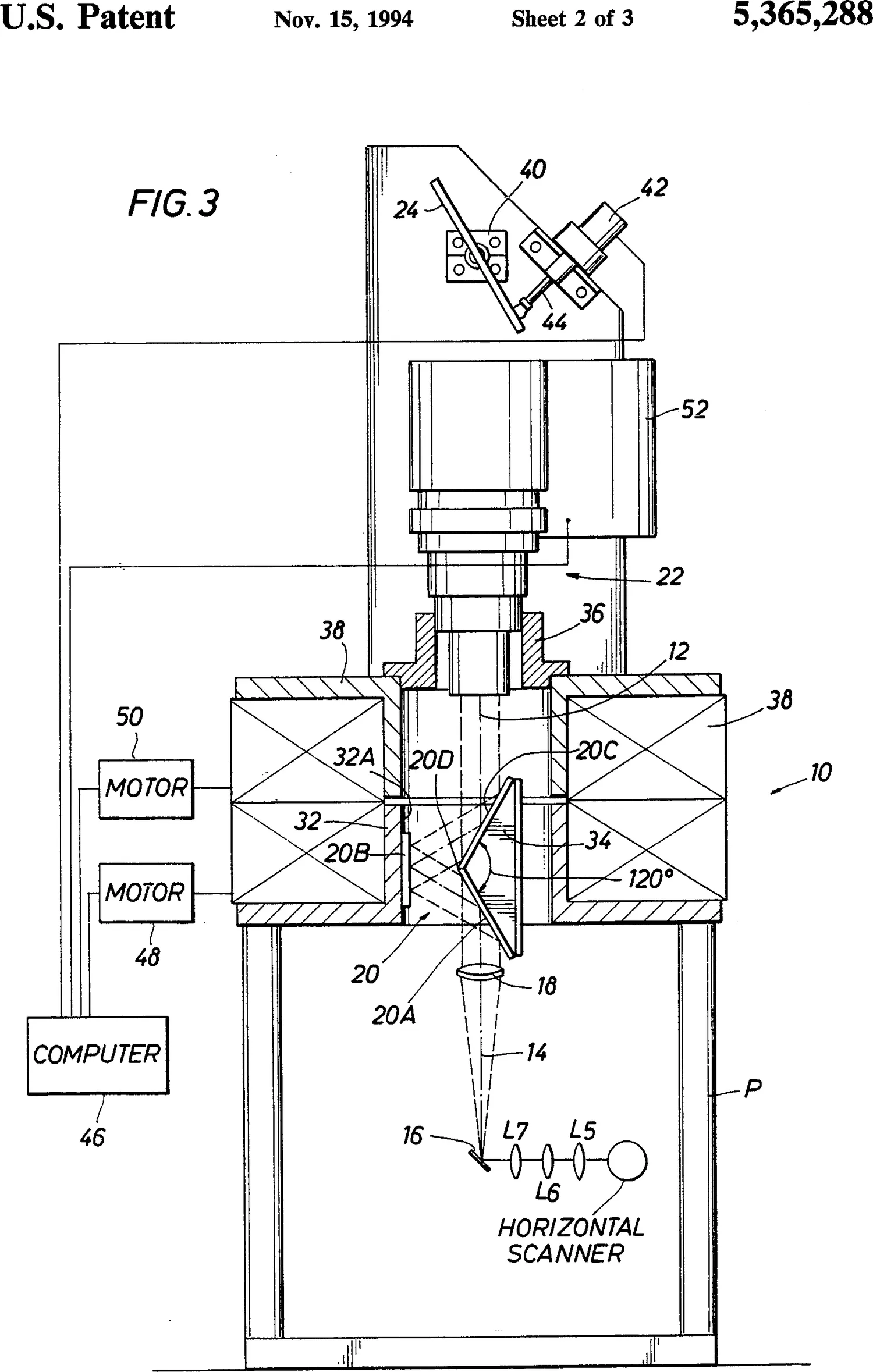
- 1 Steering mirror — tilts to aim the image
- 2 Image-mover assembly — moves the projected image
- 3 Horizontal scanner — draws each line of the raster
- 4 Projection surfaces — where the steered image lands
- Patent number
- US 5,365,288
- Issued
- November 15, 1994
- Inventors
- Paul A. Linden, Lloyd G. Cross, Duane S. Dewald
- Assignee
- Advanced Laser Projection, Inc.
U.S. Patent 5,365,288, “Image Mover,” extends the laser projection work in a natural direction. Once you can cast a large, sharp image with lasers, the next question is how to move it — and doing that by physically swinging a heavy projector is clumsy.
What it does, in plain English
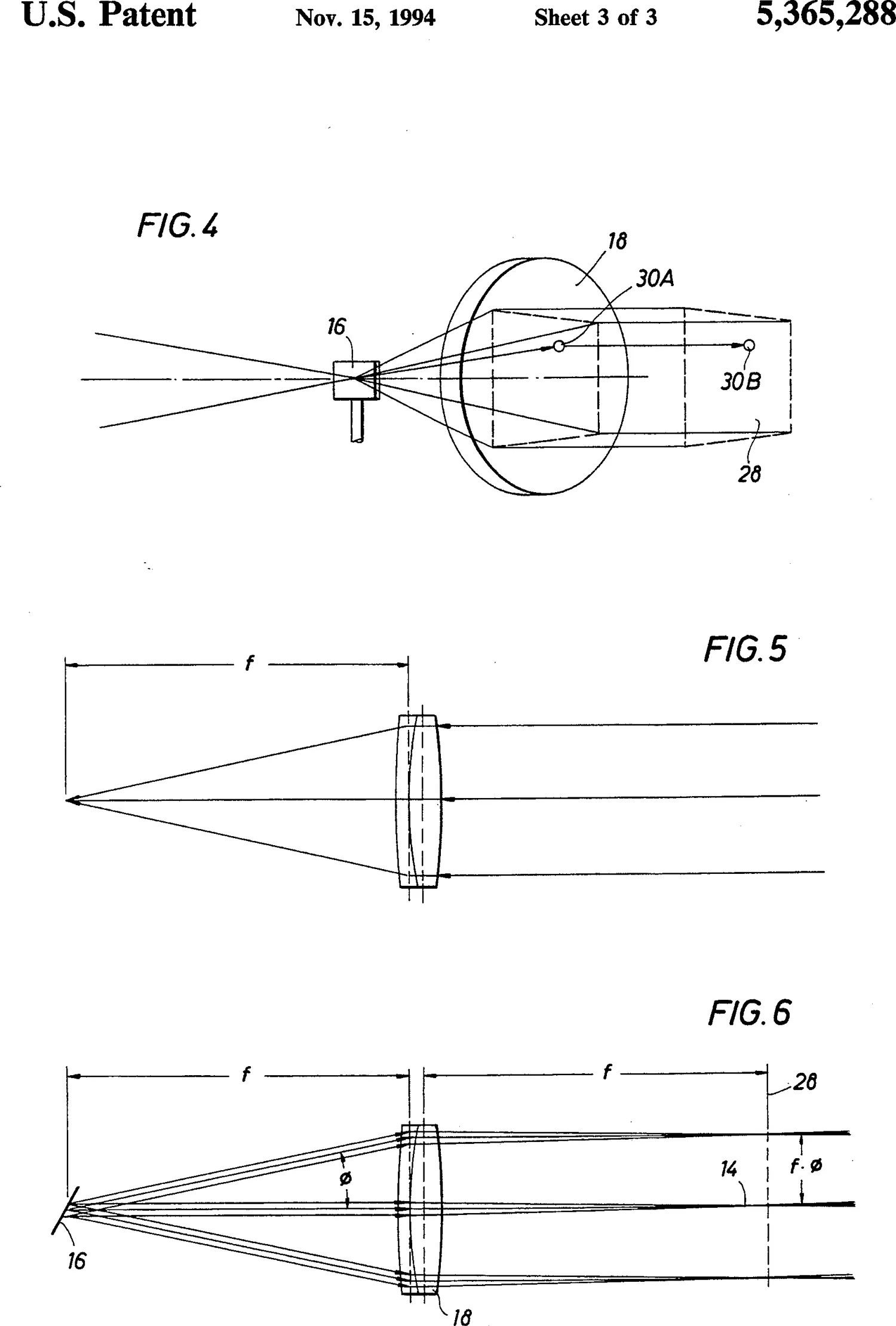
The Image Mover is an optical system that moves, rotates, or repositions the projected image using specialized optical assemblies — steering the picture across a surface without moving the projector body itself. It allowed full 360° image rotation, 80° of tilt, and continuous rotation of up to 90° per second, all synced to SMPTE time code so the moving image could be choreographed frame- accurately with a show. For large-format shows and installations, that kind of control opens up dynamic, animated staging that a fixed projector cannot provide.
Collaborators
The patent names Paul alongside Lloyd G. Cross — a pioneer of holography and the multiplex hologram — and Duane S. Dewald, and is assigned to Advanced Laser Projection, Inc. Cross’s deep background in optics and holography made him a natural collaborator on a problem about steering light with precision.
The full patent is available from the USPTO and Google Patents.
Technical abstract
The patent concerns an optical system for moving, rotating, or repositioning a projected image using specialized optical assemblies.